Free Mobility Scooter Repair Manual Overview
Free mobility scooter repair manuals offer step‑by‑step guidance for models from EWheels, Pride Mobility, Golden Technologies, and Drive Medical. These PDFs cover assembly, routine service, battery care, and troubleshooting, allowing owners to perform repairs without costly service calls. and schematics!!

Why Free Manuals Matter
Free mobility scooter repair manuals empower owners to maintain and troubleshoot their vehicles independently, reducing reliance on expensive dealer service. By providing detailed schematics, component lists, and step‑by‑step instructions, these documents enable users to perform routine maintenance—such as battery replacement, brake adjustments, and electrical diagnostics—without specialized tools or professional assistance. This accessibility is especially critical for individuals with limited mobility or those living in remote areas where service centers are scarce. Moreover, free manuals foster a sense of ownership and confidence, allowing users to quickly identify and resolve issues before they worsen. They also help preserve the longevity of the scooter by ensuring timely maintenance, which can prevent costly repairs and extend the lifespan of key components. Finally, the availability of free manuals supports a community of DIY enthusiasts who share tips, custom modifications, and safety best practices, creating a collaborative ecosystem that benefits all users. In addition, many manufacturers publish these manuals in PDF format, making them easily downloadable and printable. Users can reference the wiring diagrams to fix short circuits, consult the torque specifications for bolts, and use the troubleshooting flowcharts to isolate faults quickly. The community forums often link to these PDFs, allowing newcomers to learn from experienced technicians. By following the step‑by‑step procedures, riders can replace worn tires, inspect brake pads, and calibrate the speed controller without waiting for a technician. This proactive maintenance not only saves money but also enhances safety, as proper battery handling and regular inspection reduce the risk of overheating or electrical failures. Furthermore, the manuals often include safety warnings, recommended spare parts lists, and disposal instructions for hazardous materials, ensuring compliance with environmental regulations. These manuals empower independent repair and save time for all users. Enjoy. All in all All in all

Manufacturer-Specific Free Manuals
Free manuals from EWheels, Pride Mobility, Golden Technologies, and Drive Medical give schematics, torque specs, and troubleshooting steps. Users download PDFs to perform on‑site repairs, battery care, and part replacement without dealer costs. PDFs free now for download!!
Manufacturer Free Manuals Overview
Free mobility‑scooter service manuals are now readily available from major manufacturers such as EWheels, Pride Mobility, Golden Technologies, and Drive Medical. These documents are distributed as downloadable PDFs that contain detailed schematics, torque specifications, and step‑by‑step troubleshooting guides; By accessing the official support pages on each company’s website, owners can locate the exact model number of their scooter and retrieve the corresponding manual at no cost. The manuals cover a wide range of maintenance tasks, from routine battery checks and charger replacement to more complex procedures such as axle adjustment, motor disassembly, and electronic control unit diagnostics. Many of the PDFs also include high‑resolution images and exploded views that help users identify parts and understand the mechanical relationships within the scooter. In addition, some manufacturers provide interactive web‑based guides that allow users to click on specific components to view detailed instructions and safety warnings. The availability of these free resources has significantly reduced the need for professional service visits, especially for common issues such as worn tires, loose bolts, or battery drain. Users can also download firmware update files and install them manually, ensuring that their scooter operates with the latest software improvements. Because the manuals are updated regularly, owners can stay current with new safety standards and compliance requirements. Overall, the free manual ecosystem empowers scooter owners to maintain their vehicles independently, extend the lifespan of their equipment, and save on repair costs while ensuring that all procedures are performed safely and correctly. Bookmark for quick reference!

Popular Scooter Models Covered
Shoprider, EZ Rider, PNF, and Golden Mobility offer free manuals. These PDFs cover assembly, battery care, and troubleshooting for each model, enabling owners to perform maintenance without professional help. Download from official sites for free updates and fixesnow
Shoprider, EZ Rider, PNF, and Golden Mobility Models

Shoprider scooters are renowned for their robust chassis and user‑friendly controls. The free PDF service manual for the Shoprider series provides a detailed disassembly diagram (Figure 11) and step‑by‑step instructions for replacing the battery, tightening the axle, and recalibrating the throttle. EZ Rider models, on the other hand, feature a lightweight aluminum frame and a simplified power‑train layout. Their free manual includes a quick‑start guide, a battery‑care checklist, and troubleshooting tips for common electrical issues such as intermittent power loss or dead‑cell detection. PNF (Power‑N‑Freedom) scooters are often chosen for their high‑capacity batteries and extended range. The free PNF manual offers a comprehensive battery‑replacement procedure, a guide to interpreting the onboard diagnostic LED patterns, and a safety checklist for handling the high‑voltage lithium‑ion packs. Golden Mobility scooters, known for their ergonomic seating and adjustable controls, have a free manual that covers the entire service cycle, from routine oil changes to full motor‑module diagnostics. Each manual includes a table of parts with serial numbers, a schematic of the electrical system, and a troubleshooting flowchart that helps users pinpoint faults quickly. All four manuals are downloadable in PDF format from the respective manufacturers’ support pages, and they are updated annually to reflect firmware upgrades and new safety regulations. By leveraging these free resources, owners can perform routine maintenance, extend battery life, and address common mechanical problems without incurring costly service fees.

Types of Free Manuals Available
Free mobility scooter manuals are available as downloadable PDF service guides with schematics, parts lists, and step‑by‑step instructions, or as online tutorials that let users click through diagrams, watch videos, and download PDFs. Both formats receive annual updates for firmware and safety compliance..!!
PDF Service Manuals vs Interactive Guides
PDF service manuals are static, downloadable documents that provide detailed schematics, part numbers, and step‑by‑step instructions. They are ideal for offline use, easy printing, and quick reference during repairs. However, they lack dynamic navigation and often require manual scrolling through pages.
Interactive guides, on the other hand, are web‑based or app‑based resources that allow users to click on components, view exploded views, watch embedded video tutorials, and access searchable databases. They can be updated in real time, offering the latest firmware changes and safety notices. The downside is the need for an internet connection and the learning curve of navigating the interface.
Choosing between the two depends on the user’s preference for portability versus interactivity. Many free manual repositories provide both formats, enabling technicians to switch between a quick PDF reference and a comprehensive interactive troubleshooting workflow.
Because many manufacturers release their service data under open‑source licenses, hobbyists and professional technicians alike can adapt the schematics for custom parts, firmware updates, or educational purposes. The community forums that accompany these manuals often host user‑generated troubleshooting videos, annotated PDFs, and step‑by‑step photo guides, further expanding the knowledge base. This collaborative ecosystem reduces downtime, lowers repair costs, and empowers users to maintain their mobility devices independently.
Enjoythe freedom of self‑service.

Finding and Downloading Free Manuals
Search manufacturer sites, use model number, visit support pages, click “Free Manuals”, download PDF. Verify file integrity, use PDF reader. Many sites host free PDFs; ensure legal compliance. Bookmark links for future reference. Access updates via manufacturer forums and community repositories. (free) now
Official Manufacturer Support Pages
Most manufacturers host a dedicated support portal where owners can locate and download free repair manuals. The portal typically requires a model number, serial number, or a brief registration. For example, EWheels’ “Service & Support” section lists PDF manuals for each model, ranging from basic maintenance guides to full‑scale repair instructions. Pride Mobility’s “Customer Resources” page offers downloadable PDFs and video tutorials, while Golden Technologies’ “Technical Support” hub provides schematics and troubleshooting sheets. Drive Medical’s “Product Support” area includes a searchable database of manuals, firmware updates, and battery replacement procedures. Users should verify that the manual version matches the scooter’s firmware or hardware revision to avoid incompatibility. Many sites also provide a FAQ section and a contact form for additional queries. Additionally, some manufacturers allow users to subscribe to email alerts for new manual releases or firmware updates. By navigating to the “Support” or “Resources” tab on the manufacturer’s homepage, you can quickly locate the “Manuals” or “Documentation” sub‑section, often found under a “Service” or “Technical” menu. Once the correct model is selected, the PDF can be downloaded directly or emailed to the user’s address. This process ensures that owners have the most up‑to‑date information for safe and effective repairs. In addition to PDFs, some manufacturers provide interactive web guides that allow users to click through disassembly steps with embedded images. These guides often include safety warnings and recommended tools, helping novices avoid common pitfalls. Users should also check for archived manuals if the current portal no longer hosts older models; many manufacturers maintain a legacy section. Finally, always keep a local copy of the downloaded manual for offline reference, as connectivity issues can prevent future access. If a manual is not available on the official site, users can request it via the support email or phone line; many companies will provide a copy for free to registered owners. Some manufacturers also host a community forum where experienced technicians share tips and custom modifications. Leveraging these resources can accelerate repair times and reduce costs. Remember to check the copyright notice on each manual; while the content is free for personal use, redistribution is typically prohibited. Storing the manual in a cloud service ensures quick access from multiple devices.

Legal Considerations for Using Free Manuals
Using free manuals is generally allowed for personal repair under fair use, but redistribution is prohibited. Check the copyright notice, keep copies for personal use only, and avoid publishing the PDF. Manufacturers may restrict commercial use. Always consult the terms of service before sharing for safety
Fair Use for Personal Repair Work
Under U.S. copyright law, the fair‑use doctrine permits individuals to reproduce short excerpts of a copyrighted manual for the purpose of repairing their own mobility scooter. Courts consider four factors: purpose and character of use, nature of the work, amount used, and effect on market value. Personal, non‑commercial repair typically scores favorably on purpose and character, especially when the excerpt is limited to the specific component or procedure needed. The original manual’s factual nature and the fact that the user is not distributing the copy weigh in the user’s favor. However, copying large portions, especially sections that include proprietary diagrams or branding, can shift the balance toward infringement. To stay within safe harbor, keep the copied text to the minimum necessary, avoid publishing or sharing the PDF, and cite the source. Some manufacturers explicitly allow free download for owners, but they may prohibit redistribution. Always review the manufacturer’s terms of use and, if in doubt, contact the OEM for clarification; By adhering to these guidelines, owners can legally repair their scooters while respecting intellectual‑property rights. Finally, remember that while fair use covers personal repair, the scope of permissible use may vary by jurisdiction, and some manufacturers may enforce stricter licensing terms. If you encounter a situation where the manual’s content is critical for safety, consider seeking professional assistance or support to avoid liability and for use!!!
Using Manuals for Routine Maintenance
Routine maintenance uses free manuals to clean wheels, check tire pressure, inspect brakes, and lubricate moving parts. Follow step‑by‑step instructions for cable tension, hinge alignment, and battery connector checks. Regular upkeep extends scooter life and ensures safe operation. Check parts as needed.!!
Battery Care and Replacement Guidelines
Free mobility scooter repair manuals provide detailed battery maintenance instructions for models from EWheels, Pride Mobility, Golden Technologies, and Drive Medical. Follow these steps to keep the battery healthy and extend its lifespan. 1. Inspect the battery terminals for corrosion and clean with a mixture of baking soda and water, then dry thoroughly. 2. Check the electrolyte level in lead‑acid batteries; top up with distilled water if below the minimum line, ensuring the battery is turned off and the scooter is on a level surface. 3. Verify the battery voltage with a multimeter; a fully charged battery should read 12.6 V or higher. 4. Perform a load test by running the scooter at a moderate speed for 10 minutes; a healthy battery should maintain a voltage above 10 V. 5. Replace any cells that show a significant voltage drop or physical damage. 6. Store the battery in a cool, dry place and avoid full discharge; recharge within 24 hours if the voltage falls below 10 V. 7. Follow the manufacturer’s recommended replacement interval, typically 2–3 years for sealed lead‑acid batteries. 8. When installing a new battery, align the terminals correctly, tighten the mounting bolts to the specified torque, and reconnect the charger. 9. Dispose of old batteries according to local regulations or recycle through a certified e‑waste program. By adhering to these guidelines, users can reduce downtime, maintain performance, and comply with safety standards. Follow safety instructions for scooter to avoid injury now.
Safety Precautions While Repairing
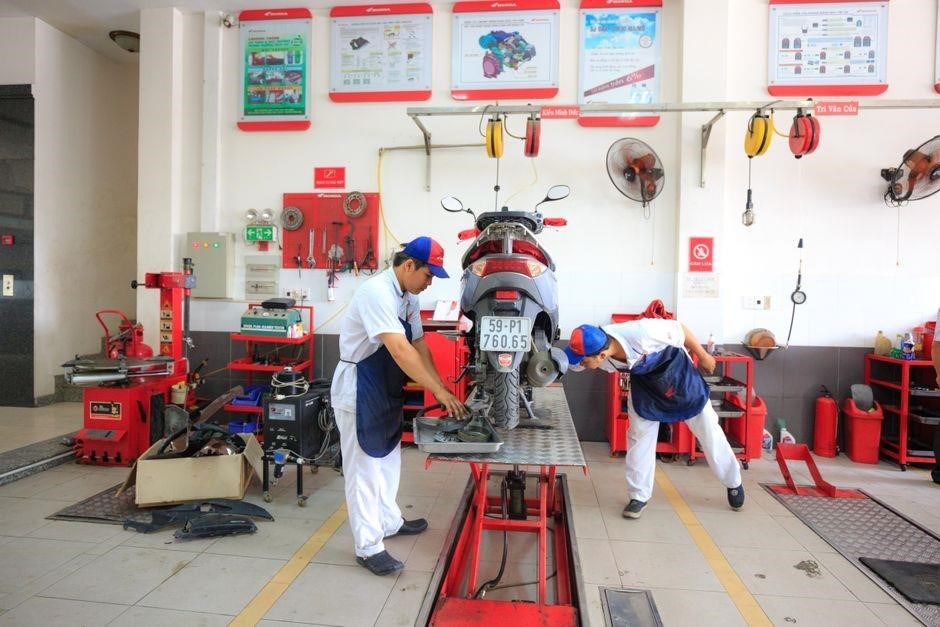
Before starting any repair, disconnect the battery and place the scooter on a stable surface. Wear insulated gloves and safety glasses. Clean terminals, check voltage, and follow the free manual’s torque specs for bolts. Store the scooter dry. Keep charger off!!.

Power-Off and Battery Handling Steps
Before any disassembly, ensure the scooter is on a flat, stable surface and the seat is secured. Locate the main battery compartment, usually behind the rear seat or under the floor panel. Use the free repair manual’s diagram to identify the correct access panel. Remove the panel by unscrewing the designated screws with a Phillips head. Once open, disconnect the battery by first removing the negative (-) terminal to prevent accidental short circuits. Then remove the positive (+) terminal. If the scooter uses a removable battery pack, lift it gently and place it on a non-conductive surface. For sealed lead-acid or lithium-ion packs, use insulated gloves and a battery tester to verify the voltage is below safe handling levels. While handling, avoid touching exposed terminals with bare hands. After removal, inspect the battery for corrosion or swelling; replace if necessary. Store the battery in a cool, dry place, away from flammable materials. When reassembling, reconnect the positive terminal first, then the negative, tightening each to the torque specified in the manual. Finally, replace the access panel and secure all screws. Test the scooter’s power system before use to confirm proper operation. By following these detailed steps, owners can confidently maintain battery health, extend scooter lifespan, and avoid costly repairs, all while staying compliant with safety guidelines and manufacturer recommendations. Keep the battery fully charged and check for signs of wear. Regularly. Soon